Features
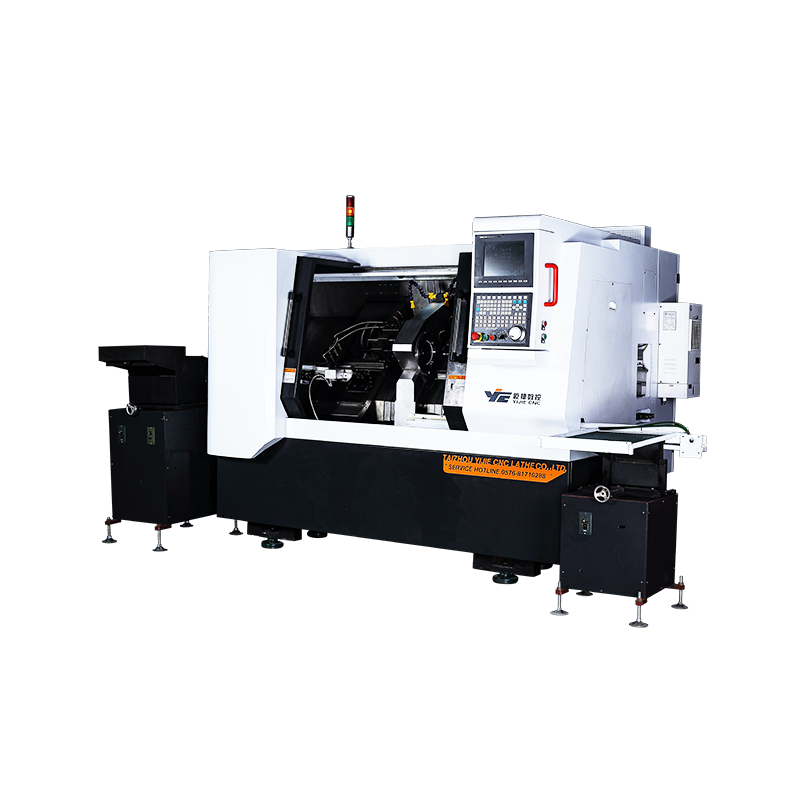
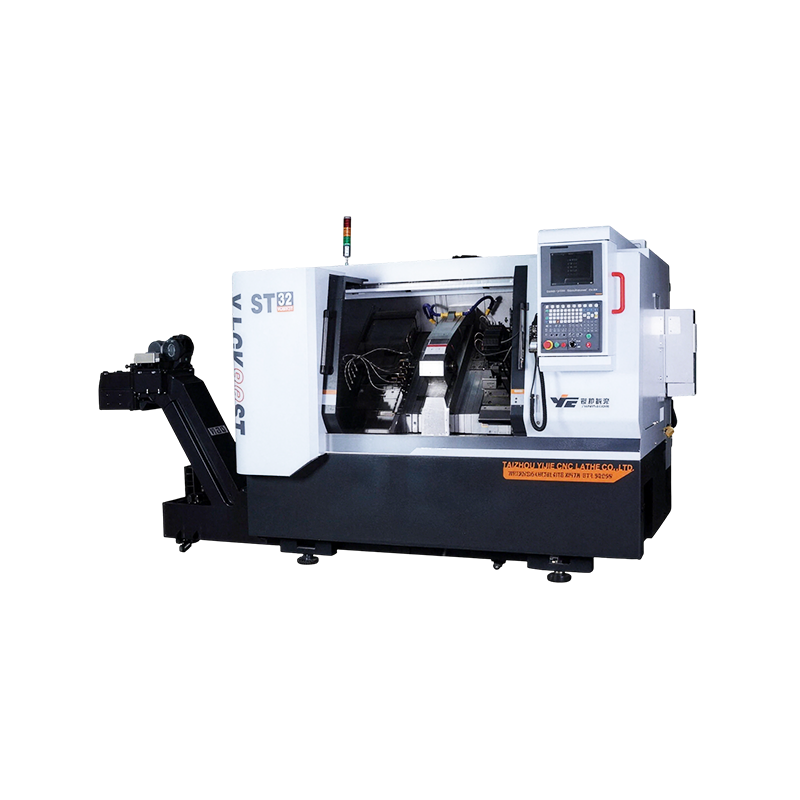
(1) Double-End Composite Machining Technology Design
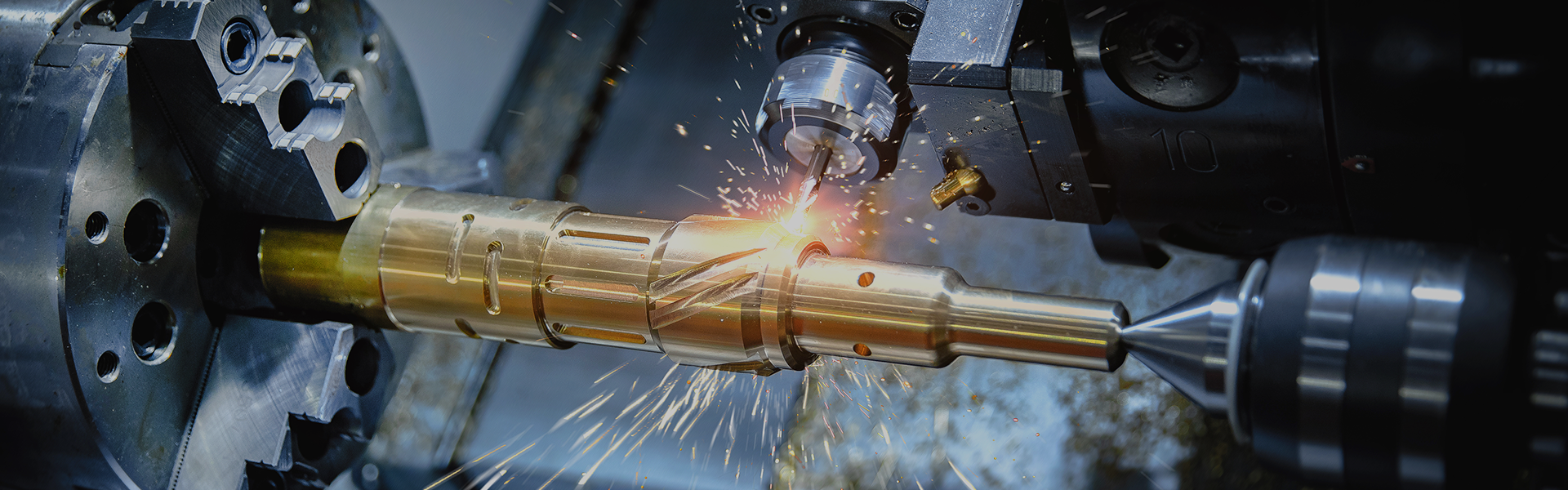
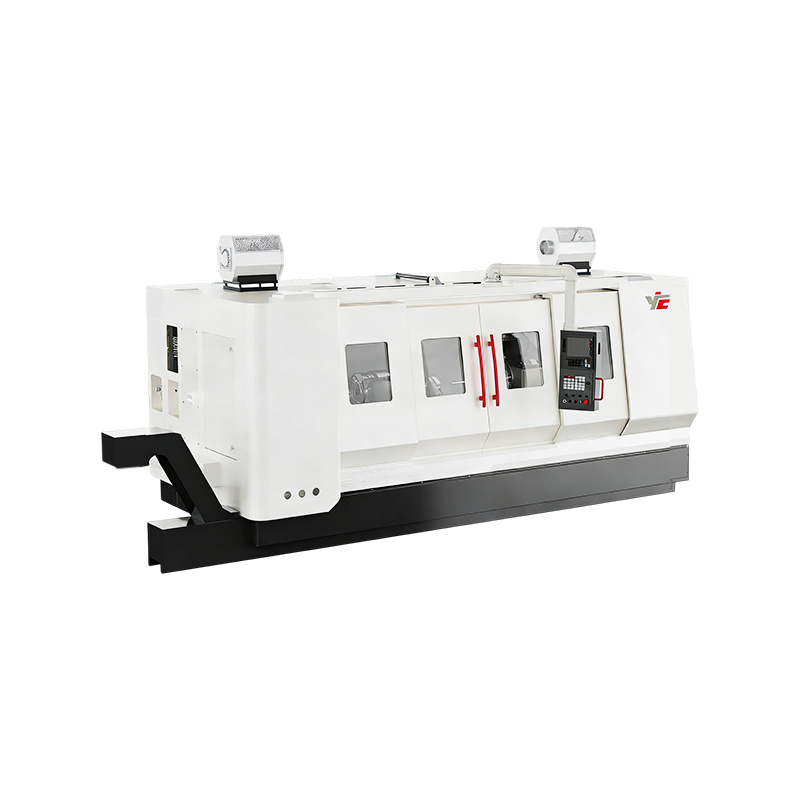
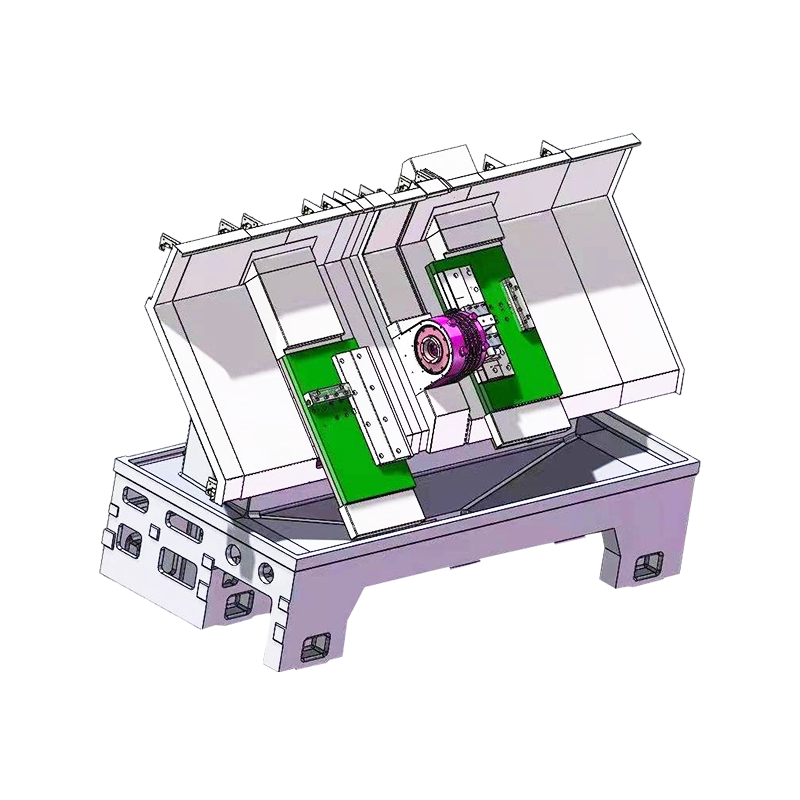
By utilizing two sets of turrets, the machine enables one-time clamping to complete multi-station machining on both ends of the workpiece. The machining allowance that originally required several separate operations is concentrated into a single composite operation, allowing multiple processes to be carried out simultaneously. Both ends are machined in one setup, avoiding errors caused by repeated clamping, ensuring machining accuracy, reducing auxiliary machining time, and improving efficiency by 2–4 times.
(2) Dual-Chuck Spindlestock Design for Both Ends
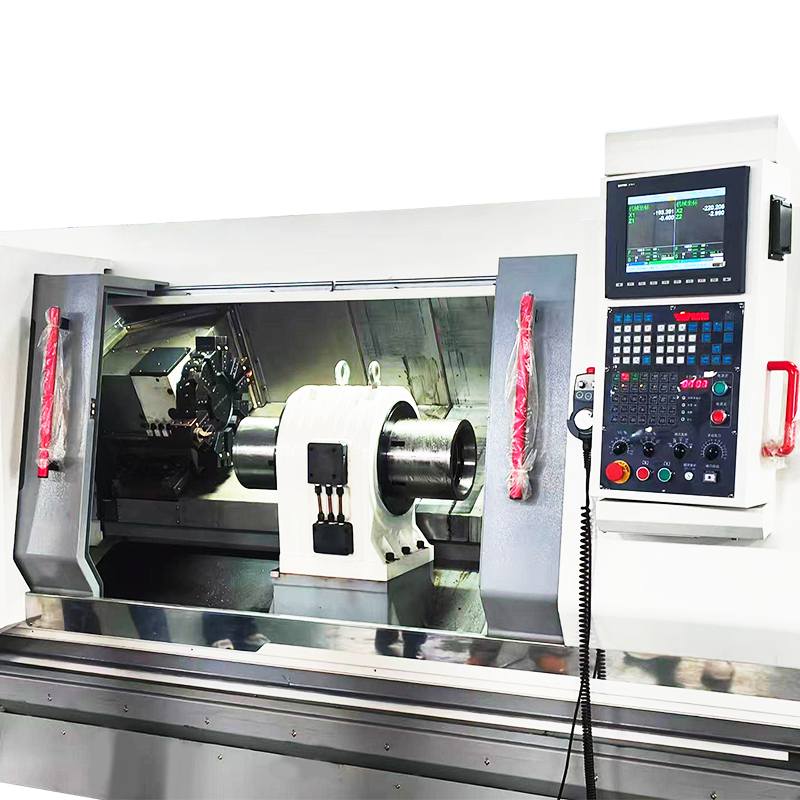
The spindlestock adopts a symmetric dual-chuck clamping structure at both ends of the spindle, changing the traditional one-sided asymmetric clamping of shaft parts, which is prone to forced vibration during cutting and may lead to unsatisfactory surface quality, dimensional accuracy, and positional accuracy.
In addition, a clearance slot is provided between the two chucks of the spindlestock, enabling the clamping of shaft parts with special-shaped structures in the middle section, thus expanding the versatility and application range of the machine tool.
(3) Extendable Bi-Directional Spindle Design
An extendable bi-directional spindle is adopted, featuring a sleeve assembly, two detachable extension sleeves fixed at both ends of the sleeve assembly, and collets embedded in the extension sleeves for clamping the workpiece. A control mechanism is provided on the sleeve assembly to drive one of the extension sleeves to move axially.
Through this control mechanism, the axial extension of the collet can be achieved, allowing the clamping capacity specifications of the bi-directional spindle to be changed by replacing only part of the components. This greatly reduces spindle replacement and maintenance costs and effectively improves the applicability range of the spindle.
(4) Intelligent Control System Design
The system integrates a shared spindlestock transmission control system and two sets of left–right symmetrical turret drive and motion control systems. PLC-based control is adopted to replace part of the relay logic and optimize the electrical system, enabling intelligent control of the machine tool. This improves contact stability, reduces wiring, and enhances production efficiency.

 English
 中文简体
中文简体 русский